

|
|
 |
|
Post 15: April 5, 2000 Post 14: Post 13: Post 12: Post 11: Post 10: Post 9: Post 8: Post 7: Post 6: Post 5: Post 4: Post 3: Post 2: Post 1:
|
 |
|
January 10, 2000: Village Portrait January 10, 2000: January 10, 2000: January 8, 2000: October 20,1999: July 8, 1999: April 5, 1999: March 29, 1999: Feb. 5, 1999: Feb. 5, 1999: Dec. 23, 1998: Oct. 27, 1998: Oct. 13, 1998: Oct. 1, 1998: Sept. 25, 1998: Sept. 17, 1998: Aug. 25, 1998: Aug. 20, 1998: Aug. 11, 1998: Aug. 9, 1998: Aug. 6, 1998: Jul. 31, 1998: Jul. 30, 1998: Jul. 29, 1998: Jul. 26, 1998: Jul. 8, 1998: Jul. 7, 1998:
|
|
|

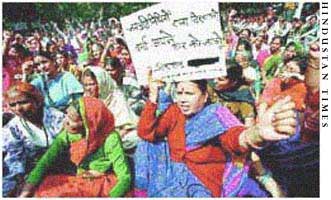
(Hindustan Times) Rally in the Capital for Uttarakhand -- March 13, 2000
Articles Letters to the Community Our People
All our relations,
In this Prayaga, we broach subjects that might sit uneasy with some. The issues of caste and women's rights have lingered over the Uttarakhand movement like a spectre since its tumultuous beginnings. The poverty of interior Uttarakhand as most vividly depicted by the outmigration of young men has also haunted our darkest worries for the future of the hills. Furthermore, the discord in the Uttarakhand movement has yet to be placed in the greater context of social ills, divisions, and prejudices afflicting hill residents.
Hopefully, the stories contained here will clarify some of these issues, if not contribute to conceiving solutions. Also included is a new section that will showcase the efforts of various organisations. Future submissions are most welcome.
R. Rawat
Secretary
R. Rawat
Uttar Pradesh has never been a popular state in the Indian imagination. It's only claim to historicity is that it conveniently kept the English initials of its predecessor, the United Provinces. UP, since its inception, has been an administrative construct only, squeezing together a hodge podge of separate kingdoms such as Agra and Oudh with whole regions like Poorvanchal, Rohilkhand, and Avadh, it was laid low by British conquest and again during the uprising of 1857. This agglomeration, rather than bringing out the distinct cultures of each of its regions, has trampled them underfoot. It is hard to remember that in UP can be found the historic cities of Agra (Taj Mahal), Jhansi (Rani Laxmibai), Allahabad (at the great Prayag of the Ganges and Yamuna), Ayodhya (birthplace of Ram), Mathura (birthplace of Krishna), and Kapilavastu (birthplace of Gautam Buddha).
At the gut level, Uttar Pradesh is a crowded state now at more than 160 million people (larger than Brazil), with many of its cities toxic to both the physical and mental health of its inhabitants. At the political level, it is a battleground of many caste-based and religious factions, and comes out only slightly ahead of Bihar in most socioeconomic indicators. Although known as the central part of the Hindi belt and for its holiest of holy cities, Benares and Varanasi, UP has limped along with its social fabric in tatters for the latter half of this past century. In essence, the state of Uttar Pradesh reflects the state of India as a whole, and as the UP Tourism web page proclaims, "the essence of India".
In the most reductionist sense, the Uttarakhand statehood movement can be described as an attempt to bail from the sinking ship that is Uttar Pradesh. Although three chief ministers of UP hailed from the hills -- G.B. Pant, H.N. Bahuguna, and N.D. Tiwari -- they never really pushed for Uttarakhand's formation as it would have compromised their personal hold over the chief battleground of Indian politics, and consequently their aspirations for national political leadership. In fact, it was G.B. Pant who first shot down the idea of creating a separate hill state back in the days of the first state reorganization committee (The dream of Uttarakhand is an old one. Recent rummaging around old literature citations found a Himachal Times article dated June 1958 that proclaimed the struggle for a separate hill state!). As such, going from the frying pan and into the fire is not the best of ideas, as the professional leadership that has ill-served the region before, would do so in an even worse way once given full control over the state apparatus.
That's why the Uttarakhand movement must be more than just for the formation of another state. It must be for the very real political empowerment of the people themselves. As previous Prayaga articles have stated, giving Uttarakhand a state like the proposed Uttaranchal Pradesh that is a carbon copy of Uttar Pradesh (if not its captive subordinate as recent amendments would make it), would launch an even worse battle that would lead to a virtual civil war between those in bed with the established powers in Delhi and Lucknow and those who want true autonomy. It would be very nasty, pitting family against family, brother against brother.
That's why we need something else other than the politics as usual movement. In discussions on the Uttarakhand eGroup, participants like Sanjai Kukreti contended that we have to be realistic about power politics in Uttar Pradesh, Ajit Tripathi added that politics was not the only battleground, and Sumant Raturi further clarified that the rule of law and accountability would be vital, a need that resonates with all inhabitants of Western UP who have seen the law and order situation go from bad to worse in decrepit, dilapidated towns like Meerut, Moradabad, and Muzaffarnagar.
Likewise, all of Uttar Pradesh's many peoples need liberation and political empowerment. They also need their submerged cultures reaffirmed as much as we do. By joining hands with them, the divide between hill and plains can be bridged, and we can walk together towards a new deal for North India. Such a grand vision is needed to combat the evil designs of those who profit from divide-and-rule, slash-and-burn politics.
Boys of Uttarakhand in Search of Wonderland
J.S. Rawat
Badri, an illiterate lad of Bamoli village in Chamoli district left his village in 1886 for an unknown destination, never expecting that he would ever return to his native village as a state guest and that the British would put a collector rank officer at his disposal for protocol formalities and hospitality.
Badri, like many other hill boys, had run away from his village at a tender age of 15 but returned as an honourable councilor and a respectable land lord of Fiji (an island nation located in the Pacific Ocean) after a gap of almost 42 years. This is neither fiction nor a story of an Indian film, but reality.
The voyage of Badri's career began from his native village Bamoli and ended in the alien land of Fiji, thousands of miles away from home. He started his career as a labourer engaged on a contractual basis in a sugar mill, situated at Sua in Fiji. Sincerity, hard work, and devotion towards his aim led him to prosperity and fame. He started buying pieces of land with his savings and within two decades, he became a prosperous landlord of Fiji. His social activities in the Indian community led him to enter Fiji's national assembly as councilor.
Alas, not every boy who runs away from his hill village is as fortunate as Badri Prasad. Since his departure in 1886, millions of Uttarakhandi boys have left their villages in search of good fortune or a better life than in the hills, but only a few have been fortunate enough to return back with such high honours, dignity, and respect as attained by Badri. Many of them returned with miseries, disease, and bitterly learned truths of life. Many returned after working as drivers, conductors, or domestic servants, but many also never came back.
Brave Uttarakhandi soldiers of the bygone era were originally 'BHAGORAS' of their village. Since time immemorial, the running away of village boys from the hills in search of wonderland has been a common practice. In fact it has become a tradition in Uttarakhand, which still continues unabated.
From almost every village of Uttarakhand, one or two boys have gone missing, according to Dr. Mahendra Singh Kunwar of HARC, a Garhwal-based NGO. There are hundreds of boys from Garhwal alone who once left their villages and never returned. There have been cases where boys who had left their villages decades earlier reappeared in the guise of sadhus. Dr Kunwar says that there is no labour law or a child labour abolition act for these boys. He says that something has to be done to stop this exodus immediately.
'DANIES', (Boys of stout height), CHHOKARAS, a typical name used for hill boys working in hotels, restaurants, and dhabas are basically those lads who play truant from their villages. They are named DANIES in hill towns, CHHOKARAS in the dhabas of the plains, and PAHARIES in the hotels and restaurants of metros.
Teenagers lead this exodus from hills, as this is the most delicate phase of life. Curiosity and deprivation draws them to the outside world. It is a matter of awe for them that there exists a land without mountains and fountains. They are attracted by the glamourous urban life styles, which they have heard from elders or from those non-resident Paharies who occasionally visit the hills from the metros of Mumbai and Delhi. These non-resident Paharies talk a lot about the wonderland of their dreams. Amidst such conditions, a teenage village lad finally decides to leave his soil in search of a dreamland of which he has only heard about but never glimpsed.
With empty pockets or meagre amounts stolen from father's pocket, they venture forth to the plains. But this money is hardly enough to sustain them even for a few days. Moreover, the bus fares extract a good portion of the money from their pocket. This very reason draws them closer to the dhabas and khokas. Abundant availability of food for the price of their labour also suits their needs.
Thus, begins their life in the companionship of new colleagues of dhabas and restaurants. Dhaba owners are also proud of their valuable possession, as these pahari boys are known for their loyalty and obedience, It is quite sad that some of these boys even become targets of the hotel owner's ill treatment. They are subjected to torture, exploitation, and are sometimes even abused. No law of the land comes forward in help of these boys. Under these inhuman surroundings the most sensitive part of their lives is spent.
Pahari boys and a pahari bhotia dog, surely possess a similarity, both of them are hot favourites in the spacious bungalows of the rich men residing in the cities, who lead an aristocratic life. Honesty and faithfulness runs in the blood of these boys. Indeed, who can challenge the robust physique of a bhotia dog, who even renders a good fight with the leopards in the hill forests. These boys are honest by nature and are dependable.
The sole source of solace for the hills has been the Indian army. Most appropriately, it is the only institution that has somehow been able to check the migration of village youth.
Chivalrous Paharis have always played a formidable role in defending the frontiers of the nation. Twenty-three battalions of Garhwal Rifles and nineteen battalions of the Kumaon regiment clearly reflects the participation of hill people in the defence forces. In addition, thousands of Uttarakhandis are presently serving in paramilitary forces. The soil of Uttarakhand has produced armymen ranging from the rank of sepoy to the chief of the staff, which exhibits martial qualities inherited by hill men. Victoria Cross awardees, Gabar Singh Negi and Darwan Singh Negi have become a part of folklore in the hills. The recent Kargil conflict and the role of Uttarakhandi sainiks, known for their excellence in mountain warfare have once again proved their mettle. It is quite correct that the entry of hill youth in the armed forces has to some extent been able to check the migration of youth power. But the army cannot accommodate the large number of hill youth who turn around in recruitment centres in order to get into their most cherished profession.
No one can deny the fact that the hills have become synonymous with poverty. An arduous life, with no source of employment pushes the hill boys to the plains. There, struggles, harassment, and exploitation awaits them with open arms. Which mother or father would ever like to send their son to far off places in order to earn a livelihood? Yet the money order economy prevalent in the hills provides the ready reply to such a query.
Numerous plans, projects, and schemes have been envisaged for the development of the hills, but most of the development remains on file and unimplemented.
The ethos of the hill problem lies with these runaway chaps for whom no heed is paid by any government or institution. It is tragic to imagine the future of Uttarakhand when its present generation is running away from its roots.
This is not only a matter of poverty or socio-economic problem. There is also the matter of dignity and special care which is a birthright of every child irrespective to social and financial status. Every year BALDIWAS is celebrated and sometimes a Year of the Child is observed, but indeed, what is the relevance of these celebrations for our pahari chhokras?
Jay Singh Rawat is a journalist working in Dehra Dun and Garhwal.
He can be contacted at:
147 MDDA Colony
Dalanwala, Dehra Dun
The Taboo Subject
Caste Relations, Past, Present, and Future
R. Rawat
A Short History of the Caste System in Uttarakhand
The coming of migrants to the hills in the last several centuries shaped the present day caste divisions in the distinct pattern of the hills. Brahmin and Rajput castes came to be divided into "Asli" and "Khas" groups by the caste-minded, as later immigrants from the plains positioned themselves at the top of the caste strata. The original "Khas" groups (Khas derived from Khasiyas, tribal people who migrated centuries before) were considered too heterodox and outside of mainstream Hindu tradition, and thus relegated to a lower position by the newcomers. The true autochthonous peoples, the present day artisan and service castes, continued to be subdivided along occupation lines, carrying out assorted, supposedly degrading, but essential services to the village community.
Three, not Four Castes
The Kshatriya or Chhetri caste formed the dominant group in the hills, making up over 60% of the population. Rajputs came to represent both the traditional village leaders and peasantry in Uttarakhand, and their economic status varied widely. Indeed, the Asli-Khas divide lost its significance with the large-scale upward social mobility of the Khas Rajputs in the 19th century and turn-of-the-century movements for social lift that propounded equality among all Rajput subcastes. However, differences have remained as witnessed by the further subdivision of Kshatriya septs into clans competing for status.
In contrast, the various Brahmin subcastes multiplied with each migration wave and became perhaps the most differentiated in hill society. Asli and Khas groups remained clearly delineated (village vs. plains pandits), while Asli groups further diverged according to ritual purity and adherence to orthodox (plains) Hinduism. In addition, Pandits from elsewhere in India settled in the region to administer the many temple trusts and service the various holy sites.
Meanwhile, the service subcastes continued to follow occupational titles. Known until recently as Shilpkars or Doms by upper caste hill residents, the newer term of scheduled caste has come into vogue. Clans of weavers, blacksmiths, barbers, and artisans, provided village services to the Rajput cultivators or cultivated the soil of Brahmin landowners as tenants. Some also held the secrets of shamanistic practices, carried down through the generations since pre-Hindu times. Other groups included the traditional balladeers and musicians of the hills.
A large number of non-Hindu and tribal residents have also resided in Uttarakhand since time immemorial. For those following caste protocols such as the Jaunsaries and some Bhotiya groups, societal structures closely paralleled those of their Garhwali and Kumaoni neighbours (in the case of Buddhist or Bon Bhotiya groups, lamas fulfilling the role of pandits). For the most part, tribal residents of the hills adopted Kshatriya status vis-à-vis Hindu society. The legitimacy of such adoption depended for the most part on the economic power of the particular community. Bhotiyas assimilated their Rajput status well, adopting wholesale Rajput septs, while Tharus, Bukshas, and Rajis only barely procurred similar recognition.
Change in the 20th Century
The dawn of 20th century brought about increased tensions between caste groups that had not previously existed to any great extent. In old Garhwal, all men, regardless of high or low caste, took Hooka together, an unfathomable deviation from the rigid caste mores of the plains. Respect was also accorded to all elders. Although the subservient position of low castes was obvious to outside observers, inter-caste relations were friendly and cordial.
This all changed with the rise of caste-based associations, beginning first with the Sarola Sabha founded in 1904 by noted Garhwali lawyer, Tara Dutt Gairola. In truth, his original motivation was not to accentuate the differences in subcastes among Brahmins, but only to employ organizational methods that had proved successful in the plains. However, this initial formation had the effect of starting Garhwal and the rest of Uttarakhand down the road of caste conflict and hatred. Other groups followed suit with their own organizations, as the rivalry between the different Brahmin groupings for supremacy reached absurd and destructive proportions, descending into personal attacks and vilification.
In response, Jodh Singh Negi, a much-respected official of Tehri state in the late 1910s, started the Kshatriya Scholarship Trust to help deserving Rajput students. His work for social improvement through coolie agency and enlistment in the armed forces, although admired by the British and a large segment of the people, brought down the ire of the royal court. His claim of caste equality among all Rajputs flew in the face of the royal family’s prerogative as the highest Kshatriya subcaste, and his efforts to awaken Rajputs to their economic and educational backwardness had few friends in the Brahmin-dominated court. He was eventually pushed out of Tehri by the Raja.
For the lower castes, no indigenous movement for uplift arose until recently. Earlier, both Arya Samaj and Gandhian sarvodaya activists attempted to uproot the backward outlook of caste-minded villagers, while working for the rehabilitation of "Harijans". In the last generation, welfare programs, and most recently, political organization has allowed the lower castes to assert their rights as human beings. In truth, this latest struggle has barely begun to overturn centuries of inequality and mistreatment, yet reaction to the restive caste situation has been swift.
Prospects for Unity Today
The poison of caste prejudice continues to this day -- an astonishing, if not surprising outcome of carefully cultivated divide-and-rule tactics of politicians and castists over the years. In the past, this has made solidarity difficult, although elites like elsewhere have often colluded to keep power for themselves. Unfortunately, the political powers that be, instead of calling for harmony and caste reconciliation, have further fanned the flames of caste antagonism, neatly carving up their vote banks in the process.
The elites of both Brahmins and Rajputs may share the blame for this fragmentation of Uttarakhandi society as vainglorious competition between them has often meant ignoring the plight and suppressing the rights of their less fortunate brethren. Indeed, the vanity of some Brahmins and Rajputs would have them consort with their caste fellows from Northern India than with each other as fellow Paharis! As such, given this betrayal of their roots, they should not be surprised when parties such as the BSP make surprising headway in the hills. The younger generation however is rapidly becoming non-caste minded, a promising development in the long, sordid history of the caste system.
Part of the impetus for the Uttarakhand movement was resistance by the upper castes to the reservation policies of the Uttar Pradesh government. However, far from being a purely caste conflict, the reaction of Uttarakhandis upended the commonly held belief that reservation equaled justice and that economic levels equaled social status. The poverty of all segments of hill society was finally given its due, as the rest of Uttar Pradesh encountered stiff resistance by trying to overwhelm the few government jobs and university seats in the hill districts with overflow from the plains. Indeed, in response to the struggle, various politicians proposed including the entire hill population in the OBC quota, or setting aside reservations for poor upper caste candidates. Although controversial, such moves did recognize that a common solution was still achievable in caste-polarized politics, an idea upon which Uttarakhand can move forward, united in the dream of ensuring equality, fraternity, and liberty for all its peoples.
The information presented here on caste history was largely drawn from Atul Saklani's seminal work, The history of a Himalayan princely state : change, conflicts, and awakening : an interpretative history of Princely State of Tehri Garhwal, U.P., A.D. 1815 to 1949 A.D., published in Delhi by Durga Publications (1987).
R. Rawat
The enduring strength of hill women in face of hardship, sorrows, neglect, and degradation, is humbling and astonishing to all who know them. Their lives are harsh beyond comprehension, but they still manage to survive, day after day, season after season. However, despite their ruggedness and past achievements as leaders of social movements, Uttarakhand's women have remained for the most part invisible to policy makers and society as a whole. Nowhere is this failing more glaring than in the area of health.
The poor state of women's health in the hills led RACHNA, a research and communications initiative of the Sri Bhuvaneshwari Mahila Ashram, to hold a workshop on adapting the traditional role of village pandits to the task of improving women's reproductive health. Entitled, "Preliminary Workshop on the Role of Traditional Priests (Pandits) in Improving Women's Reproductive Health in the Hill Areas", the workshop took place last August in Dehra Dun.
Several presentations provided detailed overviews of the harsh conditions afflicting Garhwali women, the reasons for them, and ways to alleviate them through community support. Among the findings were such startling statistics as 77% of Uttarakhandi women suffering from Anemia, 42% suffering from pain during menses, 55% having continuous abnormal vaginal discharges and associated symptoms, and that 89% of births took place at home without trained midwives, nurses, or doctors. The studies also reemphasized that the drudgery of women was barely interrupted by labor and delivery, as women restarted their arduous 16-17 hour workdays shortly afterwards. The pressure to have boys was also prevalent and in one region, Guptkashi, sex selective abortions had risen in frequency.
The difficult lives of hill women were further illustrated by the reasons for their terrible health status. From inadequate nutrition, to carrying the burden of family planning, to poor access to health services, the picture painted by the presentations was bleak and outrageous. Both the lack of proper health facilities in the hills and discrimination faced by women over their needs, were found to endanger needlessly their already tortuous lives. Even the availability of toilets was a major issue, where only 12.5% of women had access to this basic necessity. Water shortages and taboos surrounding menstruation also had their effect.
A full report of the two day event can be found at http://education.vsnl.com/rachnadd/Temple.htm and includes a wealth of information, often heart-rending in nature. Anyone who thinks that the disparity between men and women is closing just has to look at the various reports to see how far we still have to go. Hopefully, such work will continue and yield the concrete results that will involve social change, education, infrastructure, and more fundamentally, the struggle for women's rights, justice, and equality.
Statistics quoted from the following sources:
1. State of Women’s Health in Uttarakhand by Dr Satyendra Srivastava
2. Women’s Health as Seen Through Field Programs of SBMA by Dr Lokesh Raturi.
3. Community Health Needs Assessment -- a questionnaire survey in Garhwal Himalayas conducted in July 1997. It was based on detailed personal interview of 320 housewives with a child under two years, in forty villages of Tehri, Uttarkashi, Pauri & Chamoli districts.
4. Pahade Ke Cheli -- a booklet brought out by SAHAYOG, outlining various facts and findings about women’s health in Uttarakhand.
5. Ongoing RACHNA studies -- status of women’s reproductive health in Uttarakhand. Three hundred married women in the age group of 18-30 yrs were interviewed in Chakrata, Kotdwar, Tehri, Bageshwar, and Munsyari. Focus group discussions were conducted with Traditional Birth Attendants, Women’s groups, ANMs and other service providers. Partial findings were presented.
Further Reading:
Mehta, M. "The Invisible Female: The Women of the UP Hills." Himal September/October 1991: 13-15.
Drudgery of the Hill Women / P.N. Pande. New Delhi : Indus Pub., 1996.
Year 00 for Uttarakhand:
With a special message to the NGO community
R. Rawat
The Road So Far
It has been six long years since the Uttarakhand movement blazed brightly in the consciousness of her peoples. In the succeeding years, the fire of freedom has dimmed considerably, losing its once hopeful lustre to the machinations of political rivalries and exploitation by vested interests. The idea of statehood for Uttarakhand has itself been tossed about almost carelessly, with resolutions and bills being passed more than three times by the Uttar Pradesh legislature, yet the momentum always bogging down in the swamp of competing interests and coalition politics.
Indeed, the partisan sniping and track record of the political representatives of the Uttarakhand people has been dismal, although not surprising given the overall sorry state of affairs in the political life of India. The 1994 movement did witness some hope with disparate groups uniting on a common platform, but vested interests in the mainstream parties broke out into the fore, and a struggle ensued over the ownership of a movement that was originally launched by social activists, students, women, teachers, and ordinary people. Unfortunately, as each party sought political mileage and advantage from each twist and turn of Uttarakhand's bumpy road to statehood, the movement itself was driven into the ground. Many enlightened voices grew silent in disgust, ironically, when their leadership was needed the most. As the true activists of the hills were marginalized on the battlefield, assorted anti-social elements and opportunists stepped into the void, further evaporating the mass support for the movement.
Six years on and the dream of Uttarakhand has been replaced with the looming reality of Uttaranchal. As the politicians get set to take over the reigns of government, many questions need to be raised over the lingering divisions and confusion that had so scarred the movement. As seen by the growing popularity of the Union Territory option, many Garhwalis and Kumaonis have lost faith in their professional leaders, and are unnerved by the prospect of handing power to possibly yet another set of rascals. Although, perhaps a case of cold feet before the leap into the unknown, not much in recent years has convinced them otherwise. Indeed, an Uttarakhandi elite presiding over growing corruption and poverty would be an even more demoralising catastrophe, and the ensuing political struggles, fratricidal and ugly.
Towards a New People’s Movement
To challenge the growing cynicism and despair over the future afforded by current trends, a genuine people's movement will need to be relaunched. Beginning with a sober assessment of past failures, derailments, and hijacking of issues by political parties, all those devoted to unselfishly serving the Devbhoomi and her peoples will need to put away past differences and work together in good faith. Politicians will have to reform their own behaviour and reliance on the cynical but standard divisive practices of plains politics. In fact, to rebuild the unified front and put an end to excessive partisanship, it might be necessary for all sincere activists to renounce previously held political party affiliations, now and forever. Uttarakhand must come first. Inter-party wrangling has cost the hills dearly since independence and especially this past decade, and if left unchecked, will irrevocably destroy the entire fabric of Uttarakhand society.
In all truth, party politics can only be ended by refashioning the political framework of the new state along participatory as opposed to existing representative lines. Indeed, electoral politics and central planning have been implicated by a growing number of scholars in the fragmentation and corruption of the Indian polity down to the village level, and new modes of consensual, participatory governance and transparent administration will need to be implemented for a better Uttarakhand of tomorrow. More imaginatively, a constituent assembly could be convened to draft a constitution for the new state, laying out a fresh beginning for the Himalayas. Such an exercise would go a long way to fulfilling the promise to the martyrs of the movement, and ending the policy of divide-and-rule once and for all.
Furthermore, a people's movement for such revolutionary goals would lend support to all the major popular movements in Uttarakhand, and would in turn expand its own ethos beyond simply struggling for political emancipation in the traditional parliamentary sense. In truth, it must speak with a progressive voice, fighting for the rights of all Uttarakhand's peoples, especially Dalits, women, poor farmers, and the vast numbers of unemployed youth. It should take up the banner of preserving the environment and devolving administrative powers to local groups such as Mahila Mandals. It must take a leading role in saving Uttarakhand's traditions, culture, and biodiversity. Most importantly, it must renew its stand for social justice and freedom as these have always been the rallying cry of popular struggles against oppression and domination.
The Role of NGOs
NGO leaders must also come together and lend their ideas and vision to a political system desperately in need of innovation and enlightenment. Lessons learned from reforestation, income generation, and empowerment success stories must be applied across the Himalayas, and can no longer be limited to a particular village, khal, or dhar. The formation of advisory contact groups or committees of correspondence could be that first step to institutionalising the various experiences of activists, social entrepreneurs, and project leaders operating throughout Uttarakhand and beyond.
Such groups would convene on such cogent issues as:
1. Democratic Governance
4. Social Reform
2. Resource Management
5. Environmental Policy
3. Sustainable Development
6. Cultural Preservation
The contact groups could serve as standing committees of experts and activists that would monitor and make suggestions to the new state government. As autonomous bodies, the groups would maintain correspondence and a record of their deliberations and consultations, all the while contributing to an expanding body of knowledge. The contact groups would also provide a forum for the reporting of news and events from all corners of Uttarakhand, and serve to connect isolated settlements with their fellow communities across the new state. Indeed, by merely enabling greater contact between so many activists in the field, valuable experiences and resources could be shared on a far greater scale than previously possible.
The value of such contact groups is not new. In the past, activists have come together under various organisations, and to their great credit, participated in almost every popular struggle in the hills. The Chipko activists of yesteryear spring to mind as leaders in battles on various fronts – from the Tehri dam, to save the seeds, to income generation projects and appropriate technology applications, to the ongoing fight to save the hills’ forests and return power and rights to the people. With the formation of contact groups or committees of correspondence on the possible eve of statehood, the developmental experience of the past half century can be brought to the fore and relied on to guide planning at all levels.
The Hour for Unity
In this vein, the struggle over the future of Uttarakhand has moved to a new phase. Whether the dream of statehood falters under the weight of a dysfunctional political system, or rises to break free of old practices, prejudices, and ideas, will be determined by the courage and character of the truly dedicated. This generation has a chance to revolutionize politics in the Devbhoomi and India as a whole, and to build new, original institutions in keeping with the realities of people’s lives and the new economic forces shaping the country. Although the obstacles are formidable and path forward obscured by the smoke and mirrors of powerful interests, the single clear vision of the holy Himalayas as a beautiful and joyful place manages to shine through. In conclusion, the task of the activist in the coming years will be to nurture that light, dispel the gloom, and join with others down that path of salvation and redemption for Uttarakhand and her peoples.
Jai Uttarakhand!
The Himalayan Foundation
The Himalayan Foundation is one of a number of pioneer NGOs set up as a non-profit charitable action-oriented organisation that would mobilize public opinion and generate resources for supporting developmental activities in the Himalayas. The Foundation is engaged in preservation of the social, cultural and environmental heritage of the Himalayan region.
The Foundation came into existence in 1991. Its registered office is located in the remotest area of Garhwal Himalaya in Chamoli district. It has a panel of experts of different disciplines for guiding its activities and area of work. The foundation is working under Himalayan Eco-Task Forces organized at the local level for the development and conservation of depleting forest resources. It is the first organisation in India to be given permission over 26,864.72 hectares of land by the Government for large-scale plantation/forestry to promote environmental conservation in the panchayat forests of Garhwal. The Foundation is actively involved and acting as a catalyst for making suitable amendments to the old forest policy of the Government of India so that the density of forests can be enhanced through active public participation. The efforts of the Foundation have convinced the Government of India to seriously work out a suitable eco-friendly forest policy for the hills.
For more information, please write to Dr. A.N. Purohit at:
Sartoli Village, P.O. Bagna
Nandprayag, Chamoli Distt. 246 449
Tel: 91.137.251268
Fax: 91.137.252367
Email: [email protected]
Dr. A.N. Purohit is the founder and director of the High Altitude Plant Physiology Research Centre in Chamoli, and was awarded the Padma Shree in 1998.
Himalaya Trust
The Himalayan Trust was set up in 1993 in response to the need expressed by a group of grassroots social workers and environmental professionals working in the Western Himalayan region, to join together under an umbrella organization to collectively address critical issues of environmental degradation and increasing impoverishment of mountain communities in the Himalaya. Inspired and supported in its endeavours by Swami Chidananda of Sivananda Ashram, Rishikesh, the Trust’s objectives are to fulfill the development aspirations of the small, isolated mountain communities, while safeguarding their ecological resource base, and their cultural and spiritual heritage.
Summary of Activities
1. Pilot project on "Greening of the Himalaya" in selected watersheds of Almora, Tehri Garhwal, Kangra, and Chamba districts, funded by the National Afforestation and Ecodevelopment Board (NAEB) of the Ministry of Environment and Forests. These projects were implemented by women’s and youth groups and forest panchayats.
2. Oral Testimony Project covering selected remote villages in Garhwal, Kumaon, and Himachal Pradesh to record and document traditional knowledge on socio-economic and ecological aspects of community life for dissemination through books, audio, and visual media, funded by PANOS of London.
3. Afforestation of community land of Falyanti village in Baijnath (Kumaon) by substituting pine monoculture with local mixed broad-leaf species, funded by NAEB of MoEF.
4. Extending water supply and sanitation schemes for 22 villages in Baijnath (Kumaon) along with non-formal education, health education, and catchment area protection through community effort under the Rural Development Department of the UP Government’s Swajal Project.
5. Provide training facilities to the educated youth of Kumaon and Garhwal in project formulation, survey, monitoring and evaluation through the Society for Integrated Development of the Himalaya (SIDH), for implementing community biodiversity conservation programmes in their respective villages, funded by World Wide Fund for Nature - India (WWF-I).
6. Assisting in catalytic role trained youth to implement biodiversity programme for planting economic, medicinal, or vegetable dyes species on village community lands in Garhwal and Kumaon from funds provided by WWF-I.
7. Organised training workshops on promoting vegetable dyes to restore their tradition use by tribal women weavers in the Berinag area of Pithoragarh district, and initiate an integrated wool weaving, dyeing and propagation of dye-yielding plants scheme, funded by INTACH, OXFAM, Friedrich Naumann Foundation, and Action Aid.
Funding
The Himalaya Trust has bank account No. 26078 at the Bank of India, Khan Market, New Delhi 110003 open specifically for foreign donations. These can be forwarded by any American Bank either direct to the Bank of India or through any New Delhi bank with the appropriate arrangements, with instructions to transfer the funds to Himalaya Trust, Bank of India SB account mentioned above. Copies of such remittances should be sent to:
N.D. Jayal
Himalaya Trust
Secretary/Coordinator
274/II Vasant Vihar
Dehra Dun 248 006
Tel: 91.135.773081
Fax: 91.135.620334
Email: [email protected]
For more information on the Trust and the Samvedna programme to aid earthquake victims, please visit: http://members.xoom.com/uttarakhand/HT/
1.
Nine New Songs
http://members.xoom.com/uttarakhand/
The songs include such popular hits as Tando Re Tando by Narender Singh Negi and are in Real Format. They may take some time to start up, but should play continuously thereafter.
2.
RACHNA, Research Advocacy and Communications in Himalayan Areas
http://education.vsnl.com/rachnadd/
Included are some startling statistics on the state of Women's Reproductive Health as noted in the previous story.
3.
Hill women succeed where government fails
http://www.humanscapeindia.org/hs0200/hs20013t.htm
There's a revolution afoot in Doodhatoli, Uttarakhand. And it is being led by women, who have come together to protect, afforest and manage their village forests. These women have proved that traditional values associated with conservation are far more effective than the methods of bureaucratic and unconcerned government departments. (by Aditi Kapoor)
4.
Homes, hearths, farms and forests
http://www.humanscapeindia.org/hs0200/hs2009t.htm
A photofeature on the myriad ways in which women are linked to the environment and the management of natural resources.
Our Collective Problems:
Some Straight Talk on Pressing Issues
R. Rawat
We all have shortcomings, but have you ever sat down, looked yourself in the mirror, and thought the problem might be with you? The following article was prompted by some intense soul searching. It represents one particular attempt to list the obstacles that need to be overcome for us as a people to assert our identities in the most positive manner possible. Of course, we can never be perfect, nor should we trade these set of limitations for someone else's, but admitting our faults is definitively good policy and a mark of maturity. Apologies for its utterly unscientific methodology!
In our various collective experiences as Uttarakhandis, we have all encountered patterns of behaviour or prejudices that seem to permeate our relations with our own people. This is of course not to say we are alone in having these shortcomings, but that it is always a good idea to stop for a moment and discuss frankly the problems encountered and the psychological scars shared by different families, generations, and ethnicities. What can be seen as the dark side of our national character has to be tackled openly and honestly for there to be progress beyond these limitations.
Below, is one particularly subjective set of commonly held demeanors, practices, and beliefs. Although a list based on personal observation and discussions, it nonetheless can mark the start of a far broader debate of how to transform these negative aspects, get rid of excessive psychological baggage, and throw the door of the future wide open.
False pride -- Rather than true pride, this variety masks a deep insecurity and debilitating inferiority complex that afflicts many of us. In fact, it was this very issue that prompted the compilation of this list in the first place. A good remedial step would be to develop healthy pride through cultural awareness and to dispel the pernicious notion that hill culture is backwards. This is most needed in the current young generation and the younger children, as "midnight's children" who grew up in newly independent India suffered even worse cultural disorientation than their parents during the British Raj.
Those who have grown up in the Terai, or Dehra Dun and Nainital have also had to contend with Punjabi domination of all aspects of city life. It is sad fact that Bhangra holds more of a fascination for Uttarakhandi youth than their own folk melodies. Part of the solution here lies in modernizing and popularizing folk music, without destroying its core values. Given the preponderance of Bollywood and Western pop culture images, fighting the forces of commercial degradation of culture will be an uphill task unless Garhwalis and Kumaonis take to preserving and developing the musical and folkloric traditions of their ancestors.
Women's oppression -- women are the backbone of Uttarakhand but are rare as decision makers. Ironically, it has been noted that this is more true of educated city women who have imbibed gender discrimination more than their rural sisters who have had to be tough as nails to survive. The backbreaking work of hill women is well known throughout the world and their empowerment is the key to the true empowerment of Uttarakhand and the unlocking of its full human potential (see Women's Health article in this issue of Prayaga).
Castism -- Between Brahmin and Rajput, and between upper and lower castes. Historically, caste discrimination was never as strong as in this past century, when upwardly mobile upper caste Garhwalis and Kumaonis began adopting conservative caste values from the plains. The mostly Brahmin and Rajput-dominated political leadership has to also take some of the blame for this sorry state of affairs, as they've not articulated a vision of Uttarakhandi society that is fair and all-inclusive. For the last 50 years, caste division has endured as a dark subtext in many elections. The challenge ahead is how to roll back this social evil, and reunify Uttarakhandi society before it's ripped apart by UP-style caste politics. The 1994 movement was tarnished by this failure to put forward loudly progressive ideals, as unscrupulous plains politicians like Mulayam Singh Yadav were quick to tar the movement and take advantage of the explosive situation by pushing our people's backs against the wall.
Personal Divisiveness -- Because of geography and history, Uttarakhand has never been a unified political entity as the Garhwali and Kumaoni rajas loosely presided over many petty principalities. The Garhwal-Kumaon divide persists, but perhaps not as much as the distances between valleys and even villages in every district, tehsil, and patti. Garhwal fell to the Gurkhas largely because of court intrigues and factionalization that weakened the kingdom even more than the famines and earthquake of the 1790s. The Tehri court was also riddled with intense jealousies, blood feuds, and scheming between different camps. Even today, politics is a family affair, with first cousins contesting elections from opposite sides.
As such, the next generation of politicians have to rid themselves of these bad habits, although to do so, they will also have to dump the following tendencies:
Jealousy and Paranoia -- For some reason, we have an inclination towards jealousy, rivalry, and pettiness. It has been said by more than one observer that hill folk would often rather deal with an outsider than their own people, as the issue of trust and envy would invariably come up. Of course such a penchant for bad blood would spoil any chance of collaboration -- the most necessary step for the progress of a people. We thus tend to place an inordinate amount of value on physical representations of affluence, as opposed to the diligence and hard work needed to produce them (easy money!).
Over-sensitivity -- It has been noticed by many observers that with even the most miniscule slight, the temper of a Pahari can be brought to a boil -- even worse when they are drunk. We seem very sensitive to the words and deeds of others, and can hold onto grudges for a long time. Of course, the flipside of this is that Paharis are intensely loyal. This might be a grave over-generalization, but anecdotal evidence seems to concur with ethnographic studies and general observations of hill people in popular press articles.
For this last item, we will have to learn to forgive and forget, and not let hurt feelings get in the way of working together. It is perhaps easier said than done, but keeping this perspective might liberate oneself from the spiral of recrimination and alienation that does so many movements in. On the other hand, we cannot lose that sensitivity altogether either, as it makes us feel deeper and intensely about people and the land we love and care for.