Vital
Geographic Information

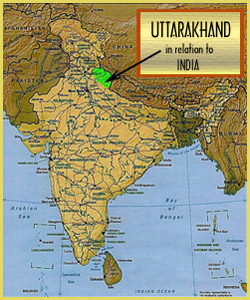
Uttarakhand is situated in the northwest portion of Uttar Pradesh, and now the large majority of the new state of Uttaranchal. It borders Tibet, Nepal, Himachal Pradesh, and the UP plains districts. Dehra Dun, the region's largest city is about 255 km away from India's capital, New Delhi, yet upon reaching the hills, the terrain and climate dramatically changes. Though patches of the dusty desert of the plains are encroaching on Uttarakhand, the region is still heavily forested and extremely hilly. The glaciers in the high hills are the source of the Yamuna and Ganges. India's highest peaks are here and so are some of Hinduism's most sacred shrines. The Indian Himalayas are said to be the abode of the gods. Indeed, Shiva, his wife Parvati and her various manifestations, and Vishnu all reside in this breathtaking Himalayan region.

13 Districts Comprise Uttarakhand

Kumaon:
  • Pithoragarh
  • Almora
  • Nainital
  • Bageshwar
  • Champawat
  • Udham Singh Nagar
Garhwal:
  • Uttar Kashi
  • Chamoli
  • Dehra Dun
  • Pauri Garhwal
  • Tehri Garhwal
  • Rudraprayag
  • Haridwar (Urban)

map

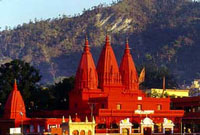
Hardwar
(Rediff) Hardwar Temple

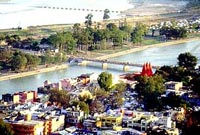
Ganga
(Rediff) Bridges over the Ganga

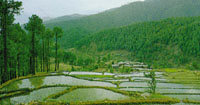
Terai
(DV) Terai Rice Paddies

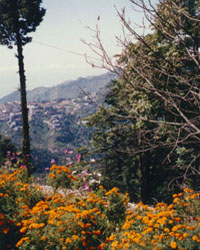
Mussoorie
(NR) Flowers of Mussoorie

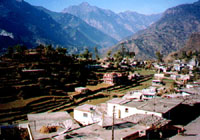
Chamoli
(RN) Chamoli Town

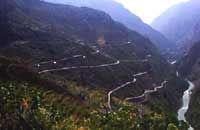
Badri road
(Rediff) Roads in the Middle Himalaya
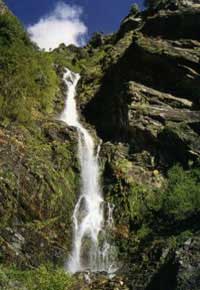
Falls
(VB) Descent

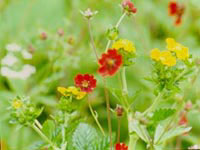
flowers
(Rediff) Flowers in the High Himalaya
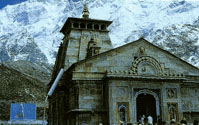
Kedarnath
(VB) Kedarnath Temple

From Space
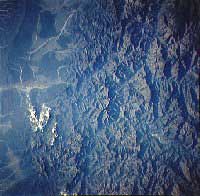
(Earthrise) Alaknanda from space

Shivling
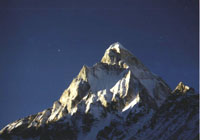
(HV) Shivling

Glaciers
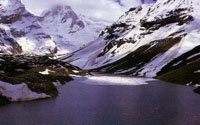
(VB) Glaciers

Nanda Devi
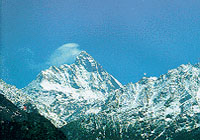
(UNESCO) Nanda Devi

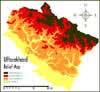
Relief Map
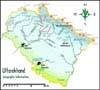
Rivers Map
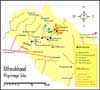
Pilgrimage Map

Physiology

Garhwal and Kumaon, the two main cultural and political divisions of Uttarakhand, can be divided into three physiological zones that span the full breadth of the central Himalayas:

1 - Northern Zone: Making up much of Uttar Kashi, Chamoli, and Pithoragarh districts, this range begins at 3000 metres and proceeds steeply at places to as high as 7600 metres.

2 - Mid Zone: Proceeding from southern Uttar Kashi through Tehri, Chamoli, Almora, and Pithoragarh, here the slope rises to heights of 2000 to 3000 metres.

3 - Southern Zone: Merging with the adjoining Terai, this area includes Dehra Dun, southern Garhwal (Pauri), and Nainital at around 600 to 2000 metres above sea level.

Highest Peaks

  • Nanda Devi (7,816 m)
  • Chaukhamba (7,138 m)
  • Satopanth (7,075 m)
  • Trisul (7,045 m)
  • Kedarnath (6,940 m)
  • Kamet (6,883 m)
  • Neelkanth (6,596 m)

River Systems

  • Yamuna - Tons
  • Bhagirathi - Bhilangana
  • Alaknanda - Mandakini / Pindar / Nandakini / Saraswati / Dhauliganga
  • Ramganga
  • Kosi
  • MahaKali - Sarju / Gori / Dauli

Vegetation

  • Himalayan Cedar (deodar)
  • Himalayan Blue Pine (chir)
  • Oak (banj)
  • silver fir, spruce, chestnut, elm, poplar, white birch, silver birch, yew, cypress. rhododendrons

SOURCE: S.D. Pant, Social Economy of the Himalayans (London, 1935)
Altitude (in feet)
Characteristic Vegetation
13,000
Vegetation ceases
12,000
Birch and blue pine
11,000
Fir, spruce, yew, cypress, bush
10,000
Rhododendron, chestnut limit;
grassy slopes begin
9,000
Higher level oaks (tilonj, kharsu)
8,000
Banj oak limit
7,000
Blue, chir pine limit;
banj oak, rhododendron in abundance
6,000
Deodar cedar begins;
banj, rhododendron give way to pine
5,000
Chir pine in abundance
4,000
Sal limit;
haldu, tun


Forests - From Low to High Altitude

    Tropical Deciduous

    • Moist Siwalik Sal (Dehradun), Moist Bhabar Sal (Ramnagar, Haldwani)

    Tropical Dry Deciduous

    • Dry Siwalik Sal (dry exposed slopes), Dry Mixed Deciduous, Dry Bamboo Brakes (lower foothills), Khair Sissoo (along streams)

    Sub-Tropical Pine

    • Lower Siwalik Chir Pine, Upper Himalayan Chir Pine (above 2000m)

    Sub-Tropical Dry Evergreen Scrub

    • Olea Scrub (lower western hills), Upper Himalayan Chir Pine (above 2000m)

    Himalayan Moist Temperate

    • Lower Temperate, Moru Oak, Moist Deodar (Himalayan cedar), Temperate Mixed Coniferous, Temperate Moist Mixed Deciduous, Kharsu Oak, Oak-fir, Cypress, Alder, Blue Pine, Dry Temperate Coniferous, High Dry Blue Pine, Dry Juniper

    Sub-Alpine

    • Sub-Alpine High Fir, Sub-Alpine Birch-Fir

    Moist Alpine Scrub

    • Birch-Rhododendron Scrub, Deciduous Alpine Scrub, Dwarf Rhododendron Scrub

    Dry Alpine Scrub

    • Dry Scrub, Dwarf Juniper Scrub


Prominent Places
  • Mussoorie
  • Nainital
  • Ranikhet
  • Auli (Ski Resort)
  • Gaumukh (Cow's Mouth)
  • "Valley of the Flowers"
  • Roop Kund (Mystery Lake)
  • Dodital (Beautiful High Altitude Lake)
  • Harki Doon
  • Pindari Glacier (foot of Nanda Devi group of mountains), various Bugyals (lush mountain meadows)
Pilgrimage Spots
  • Badrinath (Vishnu)
  • Kedarnath (Shiva)
  • "Panch" Prayag
  • Gangotri
  • Yamunotri
  • Hemkund (Sikh)
  • Sirkanda Devi Temple (Durga-Shakti)
  • Haridwar
  • Rishikesh


Mammals
  • Elephant
  • Sambhar deer
  • Barking Deer (Muntjac)
  • Musk Deer
  • Spotted Deer (Cheetal)
  • Blue Mountain Sheep (Bharal)
  • Mountain Goat (Markhor, Tahr)
  • Goat-Antelope (Serow, Goral)
  • Ibex
  • Himalayan Palm Civet
  • Clawless Otter
  • Himalayan Weasel
  • Snow Leopard
  • Leopard Cat
  • Tiger
  • Asiatic Black Bear
  • Brown Bear
  • Jackal
  • Wild Boar
  • Flying Squirrel
  • Rhesus Macaque
  • Common Langur
Birds
  • crows, vultures, jays, flycatchers, barbets, nightjars, snow pigeons, snow cocks, snow partridges, pheasants

  • Black-headed Sibia
  • Black Bulbul
  • Himalayan Cuckoo
  • Himalayan Whistling Thrush
  • Himalayan Woodpecker
  • Lammergeier (bearded vulture)

Reptiles

  • Gecko
  • Fan-throated Lizard
  • Rat Snake
  • King Cobra
  • Slender Coral Snake

SOURCES: Negi, S.S. Uttarakhand: The Land and People. New Delhi: M.D. Publications, 1995.